Best Water Filter for Pesticides and PFAS Filtration
- 1 day ago
- 5 min read
If you are shopping for the best water filter for pesticides, you are really asking a health question, not just a taste question. Standard pitcher filters often barely touch pesticide residues and do little against “forever chemicals” like PFAS that tend to show up alongside agricultural runoff.
The right filtration system depends on:
The contaminants in your tap or well water
The filtration technology
Contact time between water and filter media
System design and maintenance
This guide explains how pesticide filtration works, which water filter types offer the strongest protection, and how to choose one that fits your home and budget.
Why Pesticides And PFAS In Drinking Water Matter

Pesticides reach drinking water through several pathways:
Agricultural runoff: Rain and irrigation wash pesticides from fields into rivers, reservoirs, and shallow groundwater.
Soil seepage: Chemicals applied to lawns, golf courses, and crops can move down into aquifers.
Improper storage or disposal: Spills and leaks from barns, sheds, and industrial sites add contamination.
On top of that, many communities also face PFAS (per- and polyfluoroalkyl substances). These synthetic compounds come from firefighting foams, nonstick coatings, and industrial uses. They persist for a long time and can travel far in water.
Potential concerns from long-term exposure include:
Hormone and thyroid disruption
Effects on the immune system
Certain cancers
Developmental effects in infants and children
Families near intensive farming, people on private wells, and households with young children often decide they want filtration that targets pesticides and PFAS specifically, not just chlorine taste and odor.
“Boiling water does not remove pesticides or PFAS. It can actually concentrate them as some water evaporates.”
How Pesticide Filtration Works
Different contaminants behave differently in water. Some pesticides stick easily to carbon, some pass through standard filters, and PFAS need particularly strong treatment. So the best water filter for one home may not be right for another.
Key factors:
Filtration media: Carbon, reverse osmosis membranes, ceramic, ion exchange resins, and combinations of these
Contact time: Slower flow or thicker media usually means more removal
System design: Under-sink and countertop pressure systems often outperform simple pitchers
Main Filtration Technologies For Pesticides

Activated Carbon Block Filters
Activated carbon block filters work by adsorption, where pesticides and other organic compounds bind to the large internal surface area. High‑density carbon blocks usually remove far more pesticides than thin, granular carbon found in many basic pitchers.
Reverse Osmosis (RO)
Reverse osmosis (RO) uses a semi‑permeable membrane that rejects a wide range of dissolved contaminants, including many pesticides, PFAS, nitrates, and heavy metals. RO systems almost always include carbon pre‑filters and post‑filters, which add another layer of pesticide reduction.
Ion Exchange And Multi-Media Filters
Some cartridges mix carbon with ion exchange resins and other media. This mix can help with certain pesticide residues, heavy metals, and nitrate, and is often used in advanced under‑sink or pitcher filters.
Gravity Ceramic + Carbon Systems
Countertop gravity systems and premium pitchers may combine ceramic elements (for sediment and microbes) with dense carbon or other media for pesticides and PFAS. Performance depends heavily on design and contact time.
Distillation
Distillers boil water and collect the condensed steam, leaving many contaminants behind. They can remove a large share of pesticides and PFAS, but are slow and energy‑hungry, so most households prefer other options for daily drinking water.
Best Types Of Water Filters For Pesticides
No single product suits every home, but a few categories consistently stand out when the goal is pesticide reduction.
Activated Carbon Block Systems – Practical First Step
High‑quality carbon block filters are often the most practical starting point:
Available as under‑sink systems, countertop units, and advanced pitchers
Effective against many pesticides, chlorine, disinfection byproducts, and VOCs
Improve taste and odor while lowering organic contaminants
Look for:
A solid carbon block (not just loose granules)
Clear performance data on pesticides, VOCs, and PFAS when available
Replacement intervals that match your water use
For city water with moderate pesticide risk, a certified carbon block system can be a strong balance of cost, simplicity, and protection.
Multi-Stage Under-Sink Filters – Broad Everyday Protection
Multi‑stage under‑sink systems usually combine:
A sediment pre‑filter
One or more carbon stages
Sometimes ultrafiltration or ion exchange media
These systems suit households concerned about:
Pesticides and PFAS (when certified for them)
Chlorine or chloramine
Microplastics and fine sediment
Some heavy metals and bacteria (depending on design)
Because water passes through several layers at household pressure, these systems often give more consistent performance than basic pitchers and support a higher daily volume.
Reverse Osmosis – Deep Reduction Of Pesticides And PFAS
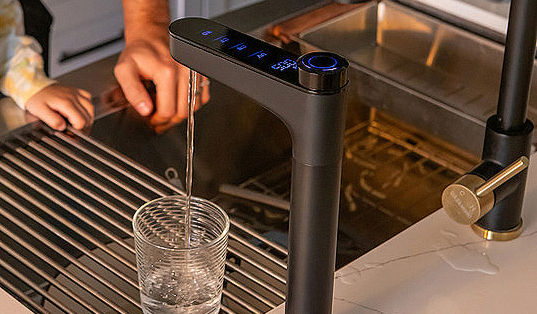
For homes that want the strongest reduction of a wide range of contaminants, reverse osmosis is usually the front‑runner for the title of best water filter:
Removes many pesticides, PFAS, nitrates, arsenic, and heavy metals
Often tested and certified under multiple NSF/ANSI standards
Provides a dedicated faucet for cooking and drinking water
Trade‑offs:
Produces a small stream of wastewater during filtration
Slower flow than an unfiltered tap
Removes minerals along with contaminants (some systems add a remineralization stage)
For families near farms or industrial sites, or those with water tests showing multiple contaminants, a modern RO system paired with strong carbon filtration is often the most reassuring choice.
Gravity Filters And Pitchers – Portable Options
High‑performance gravity systems and pitchers can be a good fit for:
Renters who cannot modify plumbing
Students and small apartments
Travel, camping, and backup use
However, not every pitcher is equal. Many basic models focus only on chlorine taste, not pesticides or PFAS — as demonstrated by research from Frontiers | Performance of pitcher-type point-of-use filters showing highly variable PFAS removal across different water sources. Choose products that publish test results or third‑party certifications for the contaminants you care about.
Certifications That Prove A Filter Works
Marketing claims are not enough. Independent certifications show whether a filter has truly been tested for pesticides, PFAS, and other health‑related contaminants.
The most relevant NSF/ANSI standards are:
Standard 42 – Taste, odor, and chlorine reduction
Standard 53 – Health‑related contaminants such as lead, many VOCs, cysts, and some pesticides and PFAS compounds
Standard 58 – Performance of reverse osmosis systems, including reduction of TDS, fluoride, some heavy metals, and PFAS
Standard 401 – “Emerging contaminants” such as pharmaceuticals and specific pesticide residues like linuron and metolachlor
Standard 372 – Confirms the system’s components are lead‑free
For pesticide protection, look for:
NSF/ANSI 53 and, for RO systems, 58
Mention of pesticides or specific named chemicals in the performance sheet
Any additional 401 certification when you live near agriculture or rely on a private well
If a filter only lists Standard 42, it mainly addresses taste and odor, not pesticides or PFAS.
Is A Water Filter For Pesticides Worth It?

For many households, the answer is yes:
You reduce long‑term exposure to pesticides, PFAS, and other chemicals that are hard to remove by any other everyday method.
You can cut back sharply on bottled water, which saves plastic waste and money. Even higher‑end under‑sink or RO systems often bring drinking water costs down to only a few cents per gallon.
You gain peace of mind each time you fill a glass, cook for your family, or mix infant formula.
For some homes, a strong carbon block system meets the need. For others, especially near farmland or industry, the best water filter will be a certified reverse osmosis system backed by solid testing data.
Holmblad Water offers filtration systems with clear performance data and third‑party certifications where available. If you are unsure which system fits your home, list your main concerns, check local water reports or get a test, then match those findings to the filter types outlined above. That simple process leads to safer water for your family, day after day.


Comments