Activated Carbon Filtration Guide: How Carbon Block Water Filters Work
Introduction
Many households worry about what might be hiding in a glass of mains water. News stories about PFAS, pesticides, and microplastics add to that concern. Bottled water can feel safer, yet it drains money and creates a steady stream of plastic waste. In Europe alone, consumers spend an estimated €45 billion on bottled water each year, even though tap water costs a fraction of that amount.
Activated carbon is a highly porous form of carbon that traps many chemicals on its surface. When manufacturers press this material into a solid carbon block filtration cartridge, every drop of water has to pass through tiny passages inside it. Using coconut shell carbon gives that block even more contact area to grab chlorine, PFAS, and pesticide traces.
This guide walks through how coconut-based activated carbon works, which contaminants it targets, and why under-sink systems suit busy homes. You will see the environmental and money benefits compared with bottled water, so you can choose a smarter way to enjoy clean, great-tasting water at home.
Key Takeaways
Activated carbon has an enormous internal surface area that attracts unwanted chemicals in mains water, helping support safer daily drinking.
A carbon block filter forces all water through the carbon, while granular beds can allow channelling around the media; solid blocks tend to give more reliable performance.
High-grade carbon blocks reduce chlorine, PFAS, pesticides, VOCs, and fine sediment, improving both safety and flavour.
Coconut shell carbon offers higher microporosity and fewer impurities than coal-based media and comes from a renewable crop by-product, which benefits both health and the environment.
Holmblad Water pairs coconut-based carbon blocks with EU production and fair pricing, suiting families who want dependable filtration without complicated equipment.
What Is Activated Carbon and How Does Carbon Block Filtration Work?
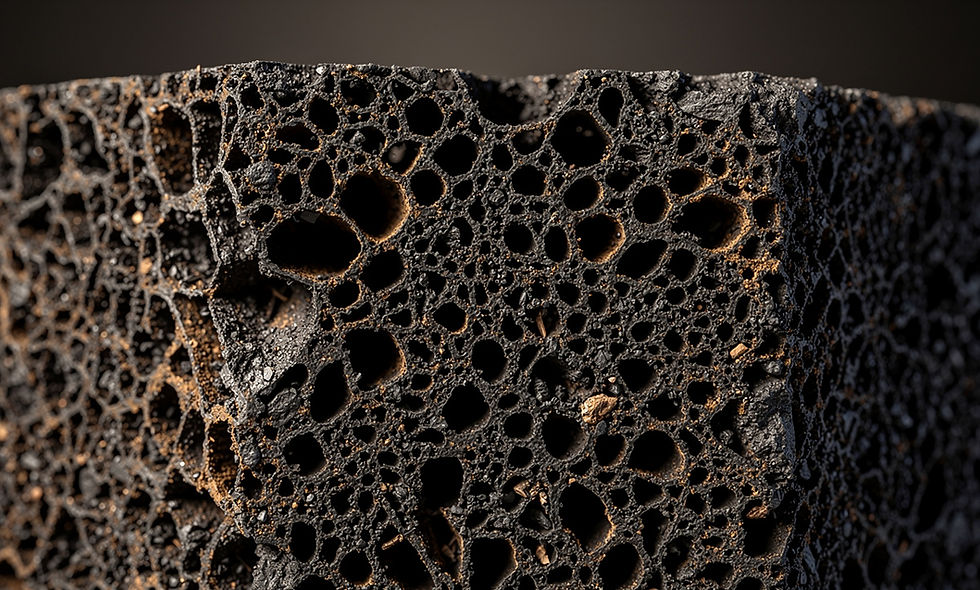
What activated carbon is and how carbon block filtration works can be summed up quite simply: activated carbon cleans drinking water through adsorption, and carbon block cartridges force every drop through this adsorbing material.
Activated carbon forms when carbon-rich materials such as coconut shells pass through very high heat in low oxygen. This activation step, usually at 800 to 1,000 degrees Celsius with steam or carbon dioxide, opens a network of tiny pores. According to the Water Quality Association, a single gram of activated carbon can offer between 500 and 1,500 square metres of internal surface area, giving plenty of room for contaminant molecules to cling.
The main process at work is adsorption, not absorption. In adsorption, molecules such as chlorine by-products or PFAS attach to the carbon surface through weak electrical forces. As water flows through the material, more and more of these molecules stick to the pore walls, so the water leaving the filter contains far fewer unwanted substances.
Many basic filters use granular activated carbon (GAC), where small grains sit loose inside a cartridge. Water can find easy paths between the grains, a problem known as channelling, so some water barely touches the carbon. Carbon block filtration compresses fine carbon powder with a binder into a solid cylinder or slab. Water must then move through a maze of controlled pores, which increases contact time and consistency.
Why Coconut Shell Carbon Is the Superior Choice

Coconut shell based activated carbon stands out because of its very fine pore structure and low impurity levels. The shells create a microporous network that suits the small organic molecules found in disinfectant by-products, VOCs, and many PFAS compounds. Coconut shell carbon typically delivers approximately 20 to 30 percent more micropore volume than coal-based alternatives, leading to better removal of the chemicals that matter most for household drinking water.
Coconut shells also come from a renewable crop rather than fossil fuels. The activated carbon uses material that would otherwise be treated as agricultural waste, which aligns well with European climate and resource goals. According to the European Environment Agency, better use of such by-products helps cut overall emissions and raw material demand. Globally, the coconut industry generates an estimated 50 billion coconut shells annually, making this raw material abundant and reliably renewable.
Holmblad Water chooses coconut shell carbon for its under-sink cartridges to gain both performance and sustainability benefits. The company's EU-based production adds strict quality control on top, so the carbon media supports health-conscious and eco-conscious values at the same time.
What Contaminants Does an Activated Carbon Block Filter Remove?
An activated carbon block filter removes a wide range of chemical contaminants and fine particles from household drinking water. The solid block structure lets it target both taste issues and health-related substances more effectively than many basic filters.
Chlorine and chloramine often come first on most lists, since UK and European utilities rely on these disinfectants. Activated carbon reacts with free chlorine and holds many of the by-products formed during disinfection. According to the World Health Organization, long-term exposure to some disinfection by-products has been linked with higher health risk, so reduction brings real value. Research indicates that carbon block filters can reduce chlorine concentrations by up to 99 percent under standard test conditions.
Here are the main contaminant groups that high-grade carbon block filtration can address:
Chlorine and chloramine give water a sharp smell and taste. Carbon blocks reduce these disinfectants and many of their by-products, leading to softer-tasting drinks and less exposure to reactive compounds.
PFAS, the so-called "forever chemicals", now appear in rivers and reservoirs across Europe. Studies summarised by the US Environmental Protection Agency show that well-designed activated carbon filters can cut many PFAS by more than ninety percent. Sub-micron carbon blocks offer the strongest performance here.
Pesticides and herbicides often reach surface water through farm run-off. Compounds such as atrazine and metaldehyde sit within the size and polarity range that activated carbon prefers. A quality carbon block adds a reliable extra barrier on top of utility treatment in rural districts.
Volatile organic compounds (VOCs) include solvents, fuel residues, and industrial chemicals. Their carbon-based structure gives them high attraction to the activated carbon surface, so a block filter can sharply lower VOC levels that slip through upstream treatment.
Sediment, rust, and other particles can cloud water and wear kettles and coffee makers. The fine pores of a carbon block physically hold back this material. That mechanical effect works alongside the chemical adsorption that targets chlorine and organics.
Microbiological cysts such as Cryptosporidium and Giardia measure only a few microns. Sub-micron carbon blocks can physically screen these out, something loose granular beds cannot achieve on their own. This added barrier gives extra reassurance for families with young children.
Carbon block filtration does have limits. Standard cartridges do not remove dissolved minerals, nitrate, fluoride, or most viruses, and heavy metal reduction needs extra media such as ion exchange resin. Holmblad Water designs its coconut-based carbon blocks around the contaminants most common in European mains water, with a focus on PFAS, pesticides, limescale, and bacteria.
High quality sub-micron carbon block filters can achieve reductions above ninety percent for a range of PFAS compounds, which now rank among the most discussed water quality concerns in UK and European homes.— Holmblad Water technical overview based on published PFAS treatment studies
Why Choose an Under-Sink Carbon Block Filtration System?

An under-sink carbon block filtration system gives a steady supply of filtered water straight from the kitchen outlet without clutter on the worktop. For most UK and European households, it balances strong contaminant reduction with convenience and low ongoing effort.
With an under-sink unit, water passes through the carbon block under mains pressure each time the dedicated outlet is opened. This pressurised flow keeps speed high while still giving enough contact time for the adsorption process. Compared with jug filters from brands such as BRITA or counter units from Aquasana, under-sink systems like those from Holmblad Water avoid the need to refill containers or wait for slow gravity flow. A typical under-sink carbon block system can filter between 3,000 and 5,000 litres before a cartridge replacement is needed, while a standard jug filter handles only around 150 litres per cartridge.
Key benefits stand out for busy homes:
On-demand supply: Under-sink systems deliver filtered water for drinking, cooking, and making baby formula whenever you open the tap. The cartridge usually treats thousands of litres before replacement, so families avoid constant refills.
Faster flow: Flow rates remain close to normal mains pressure, so filling a saucepan or sports bottle takes only moments, unlike slow jug filters that often sit half full on the side.
Clutter-free design: All main parts sit neatly in the cupboard below the sink. Worktop space stays free for food preparation and appliances, and visitors see only a neat extra outlet rather than a large device.
Consistent performance: Because the carbon block receives water straight from the supply pipe, contact time and performance stay consistent, with far less risk that someone bypasses the filter and drinks unfiltered water by mistake.
Holmblad Water takes this under-sink format and focuses it on European needs. The company's coconut-based activated carbon blocks sit in compact EU-made housings, with quick-connect fittings for straightforward DIY setup. Entry pricing from around €59 keeps the barrier low for households that now spend hundreds each year on bottled water, while long-life cartridges reduce maintenance effort.
Tip from Holmblad Water: write the installation date and recommended replacement date on a small label inside the sink cupboard. That simple habit makes it much easier to keep filtration performance on track.
According to the Drinking Water Inspectorate, more than ninety nine percent of public water samples in EU meet legal standards, yet emerging contaminants such as PFAS still raise concern. An under-sink carbon block adds an extra safety layer at the point where water enters the glass, without the cost and complexity of technologies such as reverse osmosis in most homes.
The Environmental and Economic Case for Carbon Block Filtration

The environmental and economic case for carbon block filtration rests on two simple ideas. First, filtered mains water replaces mountains of plastic bottles. Second, each litre costs only a tiny fraction of shop-bought water.
Plastic waste from bottled water now burdens rivers, beaches, and landfill sites. According to WRAP, UK residents use around 7.7 billion single-use plastic bottles each year, many of which never reach recycling plants. Switching even one household from bottled water to an under-sink carbon block setup removes hundreds of those bottles from the waste stream. A family that drinks two litres of bottled water per day would eliminate approximately 730 single-use plastic bottles each year by switching to a filtered tap system.
The money picture also looks clear. The Consumer Council for Water notes that mains water in the EU costs a fraction of a penny per litre. Compare that with typical bottled water prices of fifty pence to two pounds per litre in shops. Once a carbon block system is in place, the combined cost of cartridges and mains water usually works out at one to three pence per litre. A household spending just £1 per litre on bottled water and consuming two litres daily would save roughly £700 per year after switching to an under-sink carbon block system.
Because Holmblad Water designs its coconut-based filters for long service life, each cartridge replaces an even larger stack of bottles. Coconut shells count as a renewable by-product rather than a mined fuel, which further reduces the material footprint. For eco-aware households, this mix of lower waste and lower running cost makes under-sink carbon block filtration a very strong everyday choice.
Your Next Step Towards Cleaner Water Starts at Home

Your next step towards cleaner water starts with a clear view of your options. Coconut-based carbon block filtration offers high performance, strong sustainability, and straightforward use in one simple under-sink kit.
Holmblad Water combines EU-manufactured housings with coconut shell activated carbon blocks, long-life cartridges, and starter prices from around €59. That makes a serious upgrade from bottled water or basic jugs both realistic and affordable. Studies show that households switching from bottled water to a quality under-sink filter can recoup the initial system cost within as little as two to three months based on average bottled water consumption. Take a moment to review your current spending on bottled water, then explore Holmblad Water systems as a practical way to enjoy safer, better-tasting glasses for your household.
Frequently Asked Questions
Question 1: Is activated carbon block filtration safe for everyday drinking water use?
Activated carbon block filtration is safe for daily drinking use when the cartridge comes from a reputable manufacturer and is replaced on time. The carbon holds contaminants on its surface and does not add harmful chemicals. Holmblad Water's EU-made cartridges follow strict quality rules and come with clear change intervals.
Question 2: How often do I need to replace a carbon block filter cartridge?
Most carbon block cartridges need replacement every six to twelve months or after a set litre volume, whichever comes first. Higher usage or poor incoming water can shorten that period. Holmblad Water designs long-life coconut-based cartridges to stretch these intervals while still keeping performance high.
Question 3: Can a carbon block filter remove PFAS from mains water?
A high-grade sub-micron carbon block can greatly reduce many PFAS compounds in mains water. Studies cited by the US Environmental Protection Agency show well-designed activated carbon systems can cut common PFAS by more than ninety percent. Holmblad Water focuses its coconut-based media on PFAS and similar emerging contaminants.
Question 4: What is the difference between a carbon block filter and a reverse osmosis system?
A carbon block filter targets chlorine, PFAS, pesticides, VOCs, and fine particles while keeping helpful minerals, and it fits easily under most sinks. Reverse osmosis strips almost everything, including minerals, costs more, and wastes some water as concentrate. For most UK homes, a carbon block system offers all the protection they realistically need.
Question 5: Is an under-sink water filter suitable for renters?
Under-sink filters can work very well for renters because many kits use simple push-fit connections with no permanent changes. Tenants should check agreements before drilling for a small extra outlet on the sink. Holmblad Water designs its systems for straightforward, non-invasive installation, so they can move with you when you change home.


Comments