Is ultramembrane the best Water Filter option?
While municipal tap water must meet strict safety standards, trace contaminants such as PFAS, pesticide residues, bacteria, and microplastics can still find their way into household water supplies. Traditional water filters often address only some of these concerns, leaving important gaps in protection.
As awareness of water quality grows, many families are asking a simple question: is every glass of water from the tap as clean as it should be?
A combined carbon block and ultramembrane filtration system offers a more comprehensive solution. By pairing a high-density activated carbon block with an ultrafine membrane capable of filtering particles as small as 0.1 micron, the system targets a broad range of contaminants in a single under-sink unit. This dual-stage approach helps reduce PFAS, pesticides, chlorine by-products, bacteria, microplastics, and other unwanted substances, delivering cleaner, better-tasting drinking water directly from your tap.
This article explains how the technology works and why a dual-stage setup might be the better choice for some home owners.
Key Takeaways
Combined carbon block and ultramembrane filtration has several clear advantages that matter in everyday kitchens. These short points give a quick overview before the detailed sections
Ultramembrane filtration uses a fine membrane to strain bacteria, cysts and microplastics. It gives a physical barrier rather than relying only on the activated carbon, while keeping natural minerals in the water.
Activated carbon block handles PFAS, pesticides, chlorine and other chemical traces. It works by adsorbing these substances onto a huge internal surface. Coconut-based carbon is especially effective for many tap water contaminants.
A combined system brings these strengths together in one cartridge. It gives broad protection while staying compact, affordable and easy to maintain.
What Is Ultramembrane Water Filtration and How Does It Work?
What Is Ultramembrane Water Filtration?
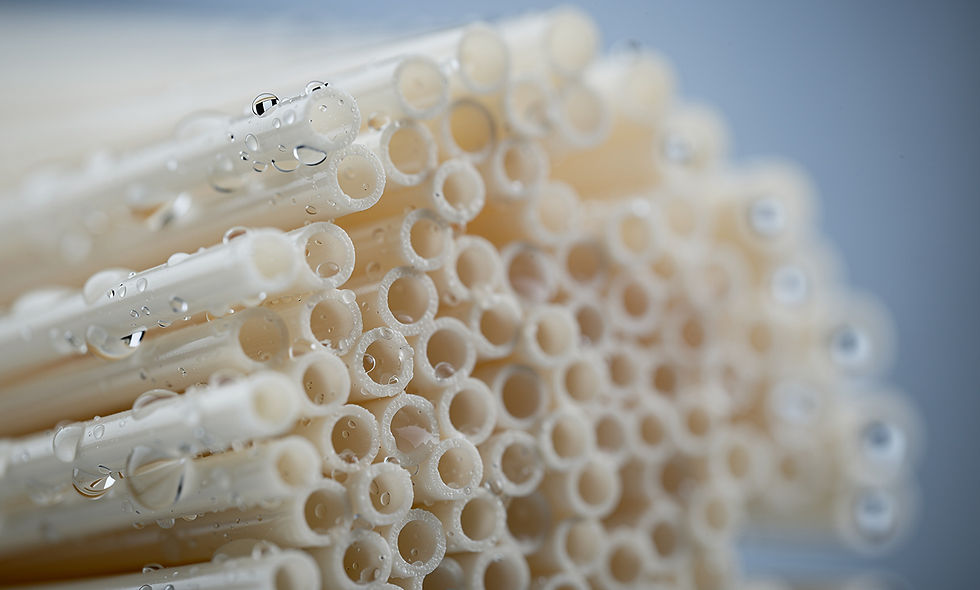
Ultramembrane filtration, often referred to as ultrafiltration (UF), is an advanced water treatment technology that removes microscopic contaminants while preserving the naturally occurring minerals your body needs. The process works by forcing water through an extremely fine membrane that acts as a physical barrier, allowing clean water and beneficial minerals to pass through while trapping harmful particles and microorganisms.
At the heart of the system is a membrane made up of hollow fibres or thin sheets containing microscopic pores. These pores are typically between 0.01 and 0.1 microns in size—small enough to block bacteria, protozoan cysts, sediment, and many microplastics, yet large enough to allow dissolved minerals such as calcium and magnesium to remain in the water.
As water passes through the membrane, contaminants are retained on the outside surface while purified water flows through. This mechanical filtration process requires no chemicals and adds nothing to the water, helping preserve its natural taste and composition.
Effective Protection Against Microbial Contaminants
Because ultrafiltration relies on physical separation rather than chemical treatment, it is highly effective at reducing bacteria such as E. coli and Legionella, as well as protozoan parasites including Cryptosporidium and Giardia. The membrane can also capture fine particles, sediment, and many microplastics that may be present in drinking water.
Another advantage of UF technology is its simplicity. Most residential systems operate using normal mains water pressure, eliminating the need for pumps, electricity, or complex installation requirements.
Ultrafiltration vs Reverse Osmosis
Ultrafiltration is often compared with reverse osmosis (RO), but the two technologies serve different purposes. Reverse osmosis uses a much tighter membrane and significantly higher pressure to remove nearly all dissolved substances, including beneficial minerals. It also produces wastewater during the filtration process, with several litres of reject water often generated for every litre of drinking water produced.
Ultrafiltration, by contrast, retains naturally occurring minerals, wastes virtually no water, and operates without electricity. For many households, this provides an attractive balance between effective contaminant reduction and maintaining the natural qualities of drinking water.
Why Point-of-Use Filtration Still Matters
Even in regions with high-quality municipal water treatment, water can travel through ageing distribution networks, building pipework, and storage tanks before reaching the tap. Along the way, bacteria, sediment, and other contaminants may be introduced.
Installing an ultrafiltration system under the kitchen sink provides a final layer of protection exactly where the water is consumed. When paired with a high-performance carbon block filter, UF technology can offer comprehensive protection against both microbiological contaminants and a wide range of chemical pollutants, helping ensure cleaner, safer drinking water every day.
Holmblad Water systems combine activated carbon block filtration with a 0.1-micron ultramembrane, creating a robust under-sink solution designed to deliver great-tasting water while retaining essential minerals.
How Carbon Block Filtration Removes PFAS, Pesticides, and Chemical Contaminants

Carbon block filtration removes PFAS, pesticides and many chemical contaminants by passing water through a dense block of activated carbon that grabs unwanted molecules. Instead of acting as a sieve, the carbon attracts and holds these substances on its huge internal surface.
This activated carbon is made from coconut shells that are heated and treated to create millions of microscopic pores. A single gram of activated carbon can have more than 1,000 square metres of surface area. As water moves through the block, contaminants such as:
Chlorine and chloramine
Volatile organic compounds (VOCs)
Many pesticides and herbicides
Some heavy metals
The solid block format matters. In loose granular filters, water can create channels that bypass much of the media. A compressed carbon block keeps flow even, so every drop spends time in contact with the carbon. That long contact time improves removal of PFAS compounds like PFOA and PFOS, chlorination by-products such as trihalomethanes, and agricultural chemicals washed into rivers and reservoirs.
PFAS are a large family of more than 12,000 synthetic chemicals used in non-stick pans, food packaging and firefighting foam, according to the European Chemicals Agency. They are sometimes called forever chemicals because they do not readily break down. Monitoring by the Drinking Water Inspectorate has found PFAS in a high number EU and US water sources, particularly near industrial and military sites. High quality carbon block filters are one of the most practical ways for households to reduce these chemicals at the tap and strengthen bacterial and PFAS filtration when paired with a UF stage.
Carbon block filtration also helps in another important way. By stripping out chlorine and organic chemicals before the water reaches a UF membrane, it protects that membrane material from gradual damage. This protection supports membrane life and keeps the overall system performing well for longer.
Why Combined Carbon Block and UF Filtration Outperforms Single-Stage Systems

Combined carbon block and UF filtration outperforms single-stage systems because each stage tackles different contaminants and they support one another. The carbon block deals with chemicals you cannot see or taste, while the ultramembrane stops living organisms and fine particles.
In a well designed under-sink system the flow usually follows this pattern:
Pre-filters catch sand, rust and larger sediment, improving clarity and protecting the main stages.
Water passes through a coconut-based carbon block that reduces chlorine, PFAS, pesticides, herbicides, volatile organic compounds and many taste or odour problems.
It then reaches the UF membrane, which gives a sharp physical barrier against bacteria, cysts and microplastics before the water leaves the tap.
This simple sequence turns the filter into a multi-barrier setup rather than a single line of defence. If the carbon block begins to approach the end of its life, the UF membrane still stops bacteria and particles. If the membrane starts to clog and its retention changes, the carbon block continues to reduce chemicals. For families with young children or older relatives, that kind of redundancy provides welcome peace of mind.
“Safe and readily available water is important for public health, whether it is used for drinking, domestic use, food production or recreational purposes.”— World Health Organization, Drinking-water fact sheet
While the EU mains supply is far safer than the global average, events such as the Cryptosporidium outbreak in Lancashire have shown how quickly a problem can spread when a single barrier fails. A combined carbon block and UF water filtration system gives households an extra layer of safety on top of central treatment.
This dual technology also compares well with simple carbon pitchers or tap-mounted filters that focus on taste. Those products may reduce chlorine but rarely give verified removal of PFAS, cysts or bacteria. At the same time, combined systems avoid the waste water and mineral loss that can come with reverse osmosis. For many British homes, carbon block and UF water filtration sits in the sweet spot between performance, running cost and everyday practicality.
How Holmblad Water's Ecoline Ultra Puts This Technology to Work

Holmblad Water's Ecoline Ultra turns combined carbon block and ultramembrane filtration into a practical under-sink water filter for everyday use. It brings four distinct filtration steps together in a single compact cartridge.
The Ecoline Ultra uses:
A 10 micron pre-filter to remove sand, rust and other coarse sediment before the main stages.
A 5 micron pre-filter to capture finer sediment and protect the carbon block and membrane.
A 1 micron coconut-based activated carbon block that reduces chlorine and chloramine, PFAS compounds such as PFOS, PFOA and PFNA, pesticides, herbicides, trihalomethanes, volatile organic compounds and many heavy metals, while also improving taste and smell.
A 0.1 micron ultrafiltration membrane that blocks bacteria including E. coli, Salmonella and Legionella, along with cysts like Cryptosporidium and Giardia and a wide range of microplastics.
According to Holmblad Water, the Ecoline Ultra cartridge is rated for up to 5,000 litres or around 12 months of normal household use, with a flow rate of up to 8 litres per minute. That means you keep a familiar feel at the tap rather than a slow trickle. Independent certifications, including NSF/ANSI 42 and 53 and TÜV AUSTRIA approval, support its performance claims, while the Italian-made housing is A.C.S. and CE certified.
Practical details suit EU kitchens and rented flats. The BPA-free housing fits neatly under the sink and connects to the existing cold water line and tap, so there is no need to drill the worktop. Filter changes use a simple twist design that does not need tools. With systems starting from about €59 across the Holmblad Water range, this level of bacterial and PFAS filtration stays within reach for many households that currently rely on bottled water.
Frequently Asked Questions
Does a UF membrane filter remove viruses as well as bacteria?
A 0.1 micron UF membrane reliably removes bacteria and cysts but is less thorough for viruses. Some larger viruses are caught, yet full virus removal usually needs nanofiltration or reverse osmosis. For EU mains water, bacteria and protozoa are the main biological focus.
How often does the Ecoline Ultra cartridge need to be replaced?
The Ecoline Ultra cartridge is rated for 12 months or 5,000 litres of water, whichever comes first. High usage or very cloudy water may shorten this interval slightly. Replacement is straightforward and tool free under the sink.
Is ultramembrane filtration better than reverse osmosis for home use?
For most homes, ultramembrane filtration is better suited to everyday drinking water than reverse osmosis. UF keeps beneficial minerals, produces no waste water and needs no electricity or pump. Reverse osmosis can remove a higher number of PFAS types and nitrate, but at higher cost and complexity.
Will a carbon block filter remove PFAS from my tap water?
High quality carbon block filters can significantly reduce long chain PFAS such as PFOA and PFOS. Laboratory tests cited by the Drinking Water Inspectorate show reductions that often exceed 90 percent when filters are correctly sized and replaced on time. Look for NSF/ANSI 53 or 419 claims when comparing products.
Can renters install an under-sink filter without permission or permanent modifications?
Many under-sink systems, including Holmblad Water's Ecoline Ultra, connect to the existing cold water line and tap with simple fittings. They do not need holes in the worktop and can be removed and taken along when moving home.
The Bottom Line on Combined Filtration for Cleaner, Safer Drinking Water
The bottom line on combined filtration for cleaner, safer drinking water is that dual technology gives stronger protection than any single-stage filter. By pairing a coconut-based carbon block with an ultramembrane, EU homes can cut PFAS, pesticides, chlorine, bacteria and microplastics while keeping natural minerals and good flow.


Comments