How Old Water Pipes Affect Drinking Water Safety
How Old Water Pipes Affect Drinking Water
Many people assume that if water leaves the treatment plant clean, it reaches the kitchen faucet in the same condition. The reality is often very different. Once you understand how old water pipes affect drinking water, it becomes clear why so many health-conscious families, renters, and eco-minded consumers now add an extra layer of protection at home.
Across the U.S. and Europe, much of the water network was installed decades ago. Those aging pipes can release metals, rust, bacteria, and chemical residues into the water on its way to your glass. The problem is often invisible — you usually cannot see, smell, or taste it.

This guide explains how old water pipes affect drinking water, what to look out for, and how smart filtration — especially coconut-based activated carbon — can protect your home without relying on single-use plastic bottles.
Key Takeaways
Old plumbing can add lead, rust, bacteria, and chemical byproducts to otherwise well-treated water.
The most serious risks are often invisible, so testing and filtration matter more than taste or smell.
Knowing how old water pipes affect drinking water helps you decide whether your home needs extra protection.
Daily habits (like flushing taps and using cold water) reduce exposure but do not fix the root cause.
Certified under-sink filters, especially coconut-based activated carbon systems, give strong protection with a lighter environmental footprint than bottled water or many reverse osmosis setups.
How Old Water Pipes Affect Drinking Water Quality
Water treatment plants in the U.S. and EU use a mix of methods: sand filtration, membrane filtration, and disinfection with chlorine or other agents. At that point, the water usually meets strict, regulated quality standards.
The problem starts after treatment. Water then travels through long stretches of public mains and the smaller pipes inside buildings — many of them 40, 50, or even 70 years old. That is where how old water pipes affect drinking water becomes a real concern:
Corrosion: Metal pipes slowly break down, releasing lead, copper, iron, and other metals into the water.
Scaling and sediment: Minerals and particles build up on pipe walls, trapping contaminants and releasing them later.
Microbial growth: Rough, aging surfaces and stagnant sections of pipe encourage biofilm and bacteria.
Engineers often call this the distribution system, and it has a huge influence on what actually comes out of your tap. Even when your utility invests in modern treatment, water still has to pass through this aging maze before it reaches your faucet. That is why people who care about health and sustainability want to understand how old water pipes affect drinking water at the tap — not just at the plant.
What Old Pipes Can Add To Your Water

Lead and Other Metals
Lead remains the most serious contaminant linked to older plumbing. Homes built before the mid-1980s are more likely to have lead service lines, lead solder, or brass fixtures that leach lead into water. The U.S. Environmental Protection Agency (EPA) sets the health goal for lead in drinking water at zero, and health agencies agree there is no safe level of lead in a child’s blood.
“No safe blood lead level in children has been identified.”— Centers for Disease Control and Prevention (CDC)
Lead exposure from drinking water can contribute to:
Learning and behavior problems in children
Lower IQ and attention issues
High blood pressure and kidney stress in adults
Pregnancy complications
Other metals such as copper and nickel can also rise in older systems, especially where corrosion control at the utility is imperfect or pipes are near the end of their life.
Rust, Sediment, and Low Pressure
Iron and steel pipes corrode from the inside, forming rust that:
Turns water orange or brown
Adds a metallic taste and odor
Provides rough surfaces where bacteria can cling
Mineral deposits (limescale) narrow the pipe opening, reducing water pressure and flow — and as research on mechanisms of metal particle release from pipe scales shows, these deposits can also shed harmful metals directly into drinking water. That same scale can hurt appliances like dishwashers and water heaters and can trap other contaminants that later break free and reach your glass — often after water has been sitting in the pipes for hours.
Biofilm, Bacteria, and Legionella
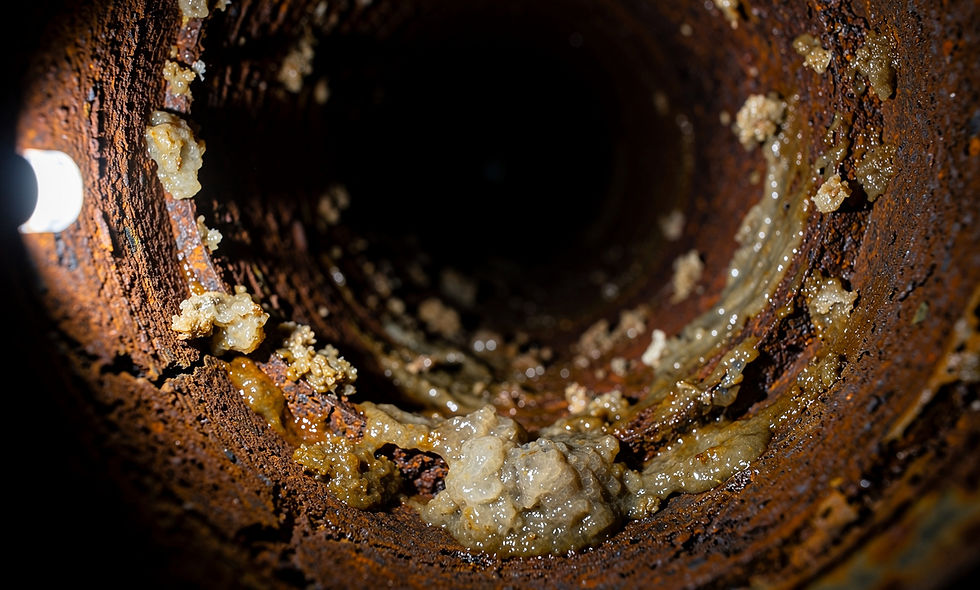
As pipes age, they develop pits, cracks, and rough areas. These are perfect attachment points for biofilm — slimy layers of microorganisms that coat the inside of pipes, a problem extensively documented in studies on the effects of corrosion scale on drinking water quality and microbial communities. Many of these microbes are harmless, but some are not.
One example is Legionella, the bacterium that causes Legionnaires’ disease, a severe pneumonia. It thrives in warm, stagnant water, such as:
Underused sections of pipe
Oversized hot water systems
Poorly maintained hot water tanks and showers
During warmer months, the risk of bacterial growth increases, especially in systems with low flow or long stretches of old pipe. Older adults, smokers, and people with weakened immune systems are more likely to get seriously ill from Legionella and similar microbes.
Chemicals, PFAS, and Plastic Pipes
Not all old pipes are metal. Many systems now use plastic pipes or asbestos-cement pipes installed decades ago. While asbestos in drinking water is still being studied, asbestos-cement mains are being replaced gradually in many regions.
Plastic pipes reduce the risk of rust and lead, but they are not perfect. Plastics can release very small amounts of organic material and additives into the water. Those compounds can feed bacteria in biofilms, and some plastic formulations may release trace chemicals over time.
In addition, water from old pipe networks can carry PFAS, pesticides, and chlorine byproducts picked up before it ever reaches your home. PFAS are sometimes called “forever chemicals” because they break down very slowly and can build up in people and the environment.
All of this shapes how old water pipes affect drinking water quality — even in buildings that only use “modern” materials indoors.
Is Your Home’s Plumbing Putting Your Water At Risk?
You do not need to be a plumber to get a sense of risk from aging pipes. Here are practical steps:
Check building age: Homes built before 1986, and many older apartment buildings, are more likely to contain lead pipes or solder and galvanized steel pipes that corrode and trap contaminants.
Ask your water utility about service lines: Many utilities keep records or maps that indicate where lead service lines are still present in the system.
Look for visual clues: Discolored water, metallic taste, or a rotten-egg smell can signal corrosion or bacterial activity. Keep in mind that lead has no taste, color, or odor.
Review your water quality report: Community water systems in the U.S. publish annual Consumer Confidence Reports that list detected contaminants and treatment methods.
Test your water: A certified lab test is the only reliable way to see what is coming out of your tap. Basic tests are usually affordable and can measure lead, other metals, and common contaminants.
Consider who drinks the water: Babies using formula, young children, pregnant people, and anyone with a weakened immune system are more sensitive to how old water pipes affect drinking water.
If you rent, you can still ask your landlord or building manager about pipe materials and whether any upgrades are planned, and you can often install an under-sink or countertop filter without major plumbing work.
Simple Habits To Reduce Exposure From Aging Pipes
Habits alone cannot fix how old water pipes affect drinking water, but they can lower day-to-day exposure:
Flush taps: Run cold water for 30–60 seconds (or until it turns noticeably colder) before drinking, especially after water has sat overnight or while you were away.
Use cold water for drinking and cooking: Hot water dissolves metals faster. Heat cold, filtered water on the stove or in a kettle instead.
Clean faucet aerators: Unscrew and rinse the tiny screen at the tip of faucets every few weeks to remove trapped particles.
Maintain hot water systems: Keep water heaters at a safe temperature (around 120°F) to balance scald risk and bacterial growth, and run showers for a short time after long absences.
Avoid boiling to “fix” metal contamination: Boiling kills many microbes but does not remove lead or other metals. It can even concentrate them as water evaporates.
These steps help, but they do not change the underlying reality of how old water pipes affect drinking water. For that, you need either new pipes or effective filtration at home.
Why Filtration Is The Smart Fix For Homes With Old Pipes

Replacing all aging water mains and service lines is a long, expensive effort that will take decades in many cities. In the meantime, homeowners and renters still need safe, good-tasting water every day — without leaning on plastic bottles.
Bottled water may feel safer, but it is costly, creates huge amounts of plastic waste each year, and often comes from the same sources as tap water. For people who care about both health and the environment, point-of-use filtration is a better approach.
When you look at how old water pipes affect drinking water, two technologies stand out for removing lead, rust, PFAS, pesticides, chlorine, chlorine byproducts, and microplastics:
Reverse osmosis (RO) systems High removal rates for many contaminants More complex installation and maintenance Often waste several liters of water for every liter you drink Many systems take up significant space under the sink, and some models use a pump that needs electricity Strip out nearly all minerals, which changes taste
Coconut-based activated carbon filters Remove chlorine, many organic chemicals, PFAS, pesticides, and particles from rusted pipes Can be paired with additional stages to reduce lead and other metals Do not waste water and do not need electricity Compact and simple to maintain (regular cartridge changes) Use a renewable raw material — coconut shells — making them climate-friendly
Whatever technology you choose, look for filters certified under relevant NSF/ANSI standards for the contaminants that matter in your area (such as lead or PFAS). Independent certification backs up the performance claims on the label.
At Holmblad Water, we focus on coconut-based activated carbon systems because they address how old water pipes affect drinking water in a practical, eco-conscious way. These systems are well suited to under-sink installations for homeowners and renters, and portable designs work for outdoor use or travel.
Conclusion
Aging plumbing is everywhere, and you cannot judge safety by taste alone. Once you see how old water pipes affect drinking water, it becomes clear that relying only on municipal treatment is not enough — especially for families with young children, people in older homes, and anyone who wants to cut back on bottled water.
By learning about your plumbing, adopting a few smart habits, and adding a certified under-sink filter based on coconut activated carbon, you can drink from your tap with far more confidence while keeping your environmental impact low.
FAQs
How Can I Tell If Old Water Pipes Are Affecting My Drinking Water?
You cannot always see how old water pipes affect drinking water. Discoloration, odd tastes, or low pressure can point to corrosion, but lead and many other contaminants are invisible. Checking your building’s age, reviewing your local water quality report, and sending a sample to a certified lab give a clearer picture of what is in your glass.
Is Bottled Water Safer Than Tap Water From Old Pipes?
Not necessarily. Bottled water is regulated differently and may still contain contaminants. It also adds significant plastic waste and cost over time. For many households, filtering tap water at the point of use is a smarter way to deal with how old water pipes affect drinking water while reducing plastic use.
Which Type Of Filter Works Best With Old Plumbing?
Look for filters certified to reduce lead, PFAS, and other contaminants that reflect how old water pipes affect drinking water in your area. Under-sink systems that combine fine particulate filtration with coconut-based activated carbon give strong performance for many homes, without the water waste and bulk of some reverse osmosis units.
Do Plastic Pipes Fix The Problem Completely?
Switching from metal to plastic can reduce rust and lead, but it does not remove all risk. Plastics can release small amounts of organic material that support bacterial growth, and your water still travels through older mains before reaching your house. Filtration at the tap remains important, even when indoor plumbing is newer.
How Often Should I Replace My Water Filter Cartridges?
Follow the manufacturer’s schedule, which usually ranges from every 3 to 12 months depending on water quality and usage. Waiting too long can let trapped contaminants break through and change how old water pipes affect drinking water at your tap. Regular replacement keeps the system working as intended.


Comments